Standard epoxy flooring should never be installed on outdoor patios, walkways, or pool decks in the Phoenix East Valley because direct ultraviolet (UV) radiation rapidly degrades aromatic epoxy resins, causing severe yellowing, chalking, and delamination within months. Outdoor exterior concrete across Maricopa and Pinal counties requires 100% aliphatic polyaspartic coatings or moisture-permeable acrylic systems engineered to withstand intense solar radiation, sub-slab ground moisture, and 115°F+ ambient heat.
Outdoor Concrete Coating Chemistry: Performance Matrix
Exterior concrete experiences direct atmospheric weathering that indoor garage slabs never face. The table below compares how standard coating chemistries perform in full desert exposure:
| Performance Metric | Standard Aromatic Epoxy | Aliphatic Polyaspartic Coating | Polyurea Base + Polyaspartic Top | Commercial Acrylic / Concrete Stain |
| Direct UV Sunlight Stability | Fails; ambers and yellows within 3–6 months | 100% UV stable; zero yellowing or chalking | 100% UV stable wear surface | Moderate to High (fades over time) |
| Max Surface Heat Tolerance | Softens at 120°F – 140°F | Withstands heat spikes up to 300°F+ | Withstands heat spikes up to 300°F+ | Degrades at 140°F |
| Substrate Breathability | Non-breathable (traps ground moisture) | Semi-breathable base configurations | High hydrostatic tolerance with moisture primer | Fully breathable |
| Monsoon Rain / Hydrostatic Resistance | Blisters when water is trapped beneath slab | High bond strength prevents moisture blistering | Resists up to 8–12 lbs MVER with specialty primers | High breathability; will not trap hydrostatic vapor |
| Thermal Expansion Flexibility | 2% – 5% elongation (brittle, cracks easily) | 25% – 100% elongation (absorbs slab expansion) | 50% – 150% elongation (bridges micro-cracks) | Low film thickness; stretches with concrete |
| Barefoot Heat Retention | High (burns bare feet in summer sun) | Moderate (light flake blends lower heat) | Moderate (vinyl flakes diffuse radiant heat) | Low to Moderate (especially knockdown textures) |
| Outdoor Expected Lifespan | Less than 12 months | 10 to 15+ years | 12 to 15+ years | 3 to 5 years (requires resealing) |
Why Standard Epoxy Fails Outdoors in the East Valley
Applying standard garage epoxy outdoors in Arizona leads to rapid structural and chemical breakdown. Three major environmental mechanisms cause failure:
1. Solar Radiation and Aromatic Photo-Oxidation
Standard epoxies are synthesized using bisphenol-A (BPA) and aromatic amine curing agents. Aromatic chemical structures contain carbon ring bonds that readily absorb ultraviolet radiation in the solar spectrum.
According to solar exposure data from the National Weather Service Phoenix Forecast Office, the East Valley experiences more than 300 days of sunshine annually. During summer months, regional sun exposure regularly hits the highest categories on the EPA UV Index Scale, registering 10 to 11+ (Very High to Extreme).
When intense UV photons strike aromatic epoxy:
- The carbon-carbon bonds split through a chemical process called photo-oxidation.
- Clear coats turn dark amber or muddy yellow.
- The cured polymer surface chalks, turning into a powdery residue that wipes off on shoes and patio furniture.
- The resin matrix becomes brittle, forming microscopic surface fractures that collect desert dirt and irrigation hard-water minerals.
2. Lack of Vapor Retarders Beneath Exterior Slabs
Interior garage floors in modern East Valley homes are poured over poly vapor barriers. Exterior patios, walkways, and pool decks are poured directly onto native desert soil or aggregate base without any moisture retarder.
- Capillary Water Rise: Automatic irrigation drip lines, lawn sprinklers, and seasonal monsoon storms saturate the soil around patio slabs.
- Vapor Drive: When the Sonoran sun heats an exposed patio slab to 150°F+, it creates a powerful thermal gradient. Soil moisture converts into vapor and migrates upward through the concrete’s capillary channels.
- Hydrostatic Delamination: Standard epoxy forms a non-breathable, impermeable sheet over the concrete. The trapped moisture vapor builds pressure beneath the coating, causing the resin to blister, bubble, and pop off the slab.
Bond strength testing performed under ASTM D4541 standards demonstrates that upward hydrostatic pressure can exceed the mechanical tensile strength of moisture-compromised coatings, pulling thin films away from concrete pores.
3. Thermal Shock and Slab Expansion
Exterior slabs in Gilbert, Queen Creek, Mesa, and Chandler experience dramatic daily temperature fluctuations. A patio slab can heat to 150°F under direct midday sunlight, then drop to 80°F during an evening monsoon microburst.
Epoxy is a rigid material with an elongation capacity of only 2% to 5%. Because concrete expands and contracts during rapid thermal transitions, a brittle epoxy coating cannot accommodate the lateral movement, leading to hairline cracking and edge peeling.
The Proven Outdoor Alternatives to Epoxy
Homeowners can still achieve a seamless, decorative finish on outdoor concrete, but the installation requires chemistry formulated specifically for direct sunlight and moisture exposure:
1. Full-Broadcast Polyaspartic Systems
Aliphatic polyaspartic resins feature an aliphatic molecular backbone with zero aromatic carbon rings. Aliphatic bonds do not absorb UV wavelengths, making polyaspartics 100% UV-stable.
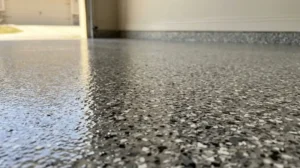
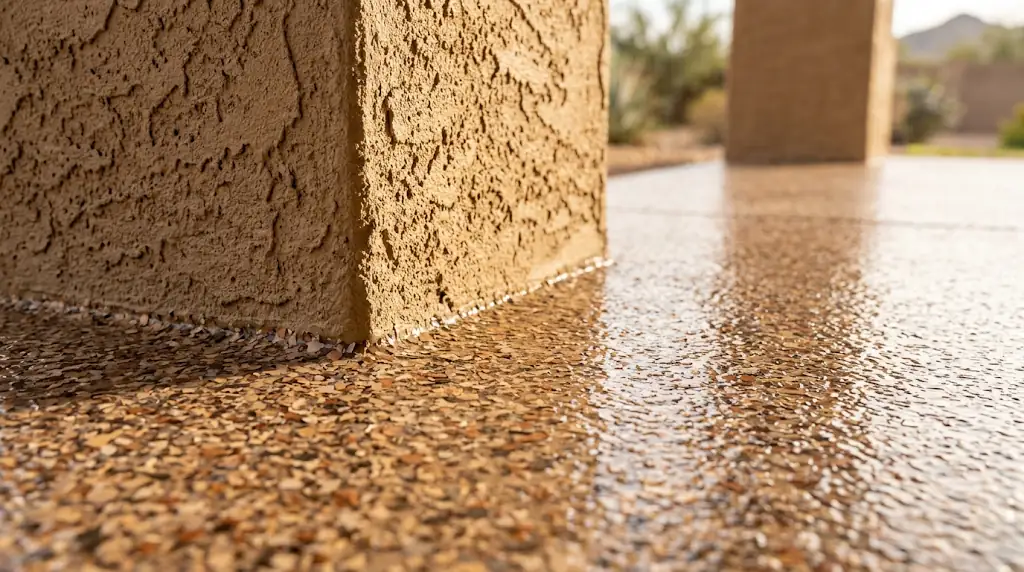
- Full Flake Shield: Flakes are cast to 100% rejection across the patio. The multi-colored flake matrix hides concrete settling cracks and diffuses radiant heat, keeping the patio cooler underfoot than dark solid coatings.
- Aliphatic Clear Cap: A clear polyaspartic topcoat locks the chips into an impermeable wear layer that will never amber, flake, or peel in the Arizona sun.
2. Moisture-Mitigating Polyurea Primers
For patios exposed to high lawn irrigation or poor perimeter drainage, contractors apply a fast-curing polyurea or deep-wicking moisture primer before broadcasting flakes. These primers penetrate deep into concrete pores profiled to Concrete Surface Profile (CSP) 2 standards using planetary diamond grinders, adhering to the slab despite substrate moisture vapor.
3. Acrylic Lace / Knockdown Texture Coatings
For poolside installations where bare feet are common, textured acrylic coatings remain a regional favorite. The open-troweled lace pattern allows concrete to breathe while creating air pockets beneath bare feet, significantly reducing surface contact temperatures during mid-summer afternoons.
Slip Resistance: Essential Safety for East Valley Patios and Pool Decks
Smooth exterior concrete coatings become extremely hazardous when wet from rain, irrigation spray, or pool water. Exterior coatings must incorporate slip-resistant aggregate additives to ensure safe pedestrian footing.
- Vinyl Flake Texture: A full-broadcast flake system naturally provides a subtle orange-peel texture that breaks up liquid surface tension.
- Micronized Polymer Beads: Fine polypropylene texturizers suspended in the polyaspartic clear coat create microscopic grip without being abrasive on bare feet around pool perimeters.
- Aluminum Oxide / Silica Quartz: For high-traffic walkways, outdoor steps, or commercial ramps, contractors back-roll 40-to-60 mesh aggregate into the topcoat to maximize wet traction.
Regional Patio Considerations Across the East Valley
Outdoor concrete conditions differ across local communities:
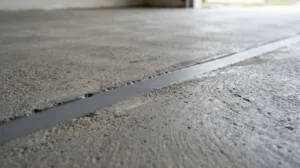
- Gilbert & Queen Creek: Expansive clay soils cause patio slabs to shift and crack along control joints. Exterior coatings must utilize flexible polyurea joint fillers that accommodate cyclic ground movement.
- Chandler & Tempe: Established patio slabs frequently have hard-water irrigation scale and landscape fertilizer staining. Heavy planetary diamond grinding is required to profile the concrete and expose fresh aggregate before sealing.
- Scottsdale: Expansive covered outdoor living spaces, barbecue ramadas, and outdoor kitchens require chemical-resistant coatings impervious to cooking grease, red wine, and grill drippings.
- Mesa & San Tan Valley: Sun-exposed southwest-facing backyard slabs demand light-toned, high-albedo chip blends (such as tan, beige, and silver-gray) to reflect maximum solar radiation and reduce barefoot heat burn.
Upgrade Your Outdoor Living Space with the Right Chemistry
While standard epoxy will quickly ruin an outdoor patio in the Arizona desert, professional 100% aliphatic polyaspartic coatings provide a durable, UV-impermeable finish that stands up to blazing sun, torrential rain, and constant foot traffic. To evaluate your outdoor patio concrete, review heat-reflective color blends, and receive an upfront estimate, visit our contact page to arrange an on-site consultation with Gilbert Epoxy Flooring.